
Renting an Apartment in Japan as a Foreigner: Complete Guide 2026
Renting an Apartment in Japan as a Foreigner: Complete Guide 2026
Japan's rental market is notoriously difficult to navigate — even for Japanese nationals. For foreigners, the process can feel overwhelming: unfamiliar paperwork, strict guarantor requirements, and upfront costs that can total several months' rent. But with the right preparation, renting an apartment in Japan as a foreigner is absolutely achievable.
This complete guide walks you through everything you need to know in 2026: types of housing, costs, required documents, how to find foreigner-friendly apartments, and what to expect after you move in.
Table of Contents
- Why Renting in Japan Is Challenging for Foreigners
- Types of Rental Housing in Japan
- Costs Involved When Renting in Japan
- How to Find a Foreigner-Friendly Apartment
- The Rental Application Process Step-by-Step
- After Moving In: Utilities and Registration
- Frequently Asked Questions
Why Renting in Japan Is Challenging for Foreigners {#challenges}
Japan has one of the most structured — and demanding — rental markets in the world. For foreigners, three core issues make the process significantly harder than in most countries.
The Guarantor Problem
Traditionally, Japanese landlords require a hoshounin (保証人) — a personal guarantor who is a Japanese national, ideally a permanent resident or Japanese citizen, who agrees to cover any unpaid rent or damages on your behalf. For most foreigners who have recently arrived in Japan, finding such a person is nearly impossible.
The good news: the rental market has evolved. Since 2020, rental guarantee companies (chinshaku hoshō gaisha) have become the standard alternative. Instead of a personal guarantor, you pay a fee (typically 50–100% of one month's rent upfront, plus an annual renewal fee of around ¥10,000–¥20,000) to a licensed guarantee company. Many landlords now accept — or even prefer — this arrangement.
Look for listings marked 保証会社利用可 (guarantee company accepted) when searching for apartments.
Language Barriers
Almost all rental contracts in Japan are written entirely in Japanese, often running 20–40 pages of dense legal language. Real estate agents (fudōsan) are not required to provide English translations. Signing a document you don't fully understand carries real risk — especially clauses around early termination fees, restoration costs, and prohibited items (pets, musical instruments, etc.).
Practical solutions:
- Work with an English-speaking real estate agent
- Use translation apps for key clauses
- Ask your employer or university international office for support
- Hire a bilingual support service
Discrimination — What the Law Says
Some landlords still refuse to rent to foreigners outright — citing language barriers, cultural differences, or concerns about short-term stays. While Japanese law does not explicitly prohibit housing discrimination based on nationality, the government has issued guidelines discouraging it, and many municipalities offer mediation services.
In practice, foreigner refusal is becoming less common in major cities like Tokyo, Osaka, and Nagoya, but remains a real obstacle in rural areas. Targeting landlords and agencies with explicit "foreigners welcome" (gaikokujin can) policies saves significant time.
Types of Rental Housing in Japan {#types}
Understanding your options is the first step toward finding the right fit for your situation and budget.
Ordinary Apartments (普通賃貸)
Standard private-market apartments — referred to as apaato (木造/軽量鉄骨) for smaller, older wood-frame buildings or manshon (マンション) for concrete buildings — make up the vast majority of rentals in Japan. These require the full application process: documents, screening, guarantor or guarantee company, and upfront costs.
Best for: Long-term residents, those with stable employment, anyone planning to stay 1+ years.
Share Houses
Share houses (shea hausu) are fully furnished shared residences where you rent a private room and share common areas (kitchen, bathroom, living room). They are by far the most foreigner-friendly option in Japan.
Key advantages:
- No key money or deposit in most cases
- Minimal paperwork — often just a copy of your residence card
- Month-to-month contracts available
- Built-in community for new arrivals
Monthly costs typically range from ¥40,000–¥80,000 in Tokyo, inclusive of utilities. Operators like Sakura House, Borderless House, and Oak House specialize in international residents.
Best for: First-time arrivals, short-term stays, those still building their Japanese network.
Weekly/Monthly Mansions
Weekly mansions and monthly mansions are furnished short-term rentals available from one week to several months. They cost significantly more per month than standard apartments but require almost no upfront commitment — just a passport or residence card.
Monthly costs in Tokyo typically range from ¥80,000–¥150,000 for a small room, utilities often included.
Best for: Bridge housing while apartment hunting, business travelers, those awaiting visa processing.
Public Housing (UR Apartments)
UR (Urban Renaissance Agency) apartments are publicly managed rental units operated by the national government. They are an excellent option for foreigners because:
- No key money (礼金 is zero)
- No personal guarantor required (guarantee company not required either)
- No agency fee
- Transparent, standardized contracts available in multiple languages
The main requirement is meeting an income threshold (typically monthly rent × 4 as monthly income). UR apartments tend to be slightly older but are well-maintained and located near major transit lines. Search at the official UR website.
Best for: Foreigners with stable income who want to avoid upfront costs and complex screening.
Costs Involved When Renting in Japan {#costs}
Move-in costs in Japan are famously high. Budget carefully before you begin apartment hunting.
Deposit (敷金) and Key Money (礼金)
| Cost | Japanese | Typical Amount | Refundable? |
|---|---|---|---|
| Deposit | 敷金 (shikikin) | 1–2 months' rent | Partially — deductions for cleaning/repairs |
| Key money | 礼金 (reikin) | 0–2 months' rent | No — a gift to the landlord |
Key money is one of Japan's most notorious rental customs. It is a non-refundable payment made to the landlord as a gesture of gratitude. Historically standard at 2 months, it has declined significantly in recent years — many landlords, particularly in competitive urban markets, now offer zero key money (reikin nashi) listings. Always negotiate or filter specifically for these.
The deposit is refundable in principle, but landlords deduct cleaning fees and restoration costs. Japan's Civil Code (revised in 2020) now clarifies that tenants are only responsible for damage beyond normal wear and tear, but disputes remain common. Get a written inventory of the apartment's condition at move-in.
Agency Fee (仲介手数料)
Real estate agencies charge a brokerage fee of up to one month's rent + consumption tax (10%). This is legally capped at one month's rent when both landlord and tenant are represented, though in practice most agencies charge the full amount to the tenant. Some online platforms and direct-rental landlords charge zero agency fees.
First Month Rent and Guarantor Fee
You will pay pro-rated rent for the current month at signing, plus the first full month in advance. If using a rental guarantee company, expect to pay 50–100% of one month's rent as an initial guarantee fee, with annual renewal fees of ¥10,000–¥20,000.
Additionally, many apartments require you to purchase a fire insurance policy (kaji hoken) — typically ¥15,000–¥20,000 for a two-year term.
Total Move-In Cost: Real Example
Here is a realistic breakdown for a ¥70,000/month apartment in Tokyo:
| Item | Amount |
|---|---|
| Deposit (1 month) | ¥70,000 |
| Key money (1 month) | ¥70,000 |
| Agency fee (1 month + tax) | ¥77,000 |
| First month's rent (pro-rated) | ¥70,000 |
| Guarantee company fee (0.5 month) | ¥35,000 |
| Fire insurance (2 years) | ¥18,000 |
| Total | ¥340,000 |
That is nearly 5 months' rent before you've lived there a single day. This is why share houses and UR apartments are so popular with new arrivals.
How to Find a Foreigner-Friendly Apartment {#finding}
Best Real Estate Sites for Foreigners
Several Japanese property portals have English interfaces or foreigner-focused filters:
- Suumo (suumo.jp) — Japan's largest property database; Japanese interface but comprehensive
- Homes (homes.co.jp) — Similar to Suumo; some English filtering available
- GaijinPot Apartments — English-language platform specifically for foreigners; listings marked as foreigner-friendly
- UR Housing (ur-net.co.jp) — Official UR portal; English pages available
- Sakura House / Borderless House — Share house specialists for international residents
When filtering, look for these Japanese terms indicating foreigner acceptance:
- 外国人可 (gaikokujin ka) — Foreigners accepted
- 礼金なし (reikin nashi) — No key money
- 保証会社利用可 (hoshō gaisha riyō ka) — Guarantee company accepted
Working with an English-Speaking Agent
A bilingual real estate agent is invaluable for navigating the rental process. Many agencies in major cities specialize in foreign clients:
- Ask specifically for an English-speaking agent (eigo ga hanaseru tantōsha) when calling
- Agencies in expat-heavy areas (Shinjuku, Minato-ku, Namba) often have multilingual staff
- Your employer's HR department or university's international student office may have agency partnerships
Be clear about your visa status, employment type, and budget upfront. Agents who work with foreigners regularly will know which landlords are open to foreign tenants and which to avoid.
The Rental Application Process Step-by-Step {#process}
Required Documents
Prepare these documents before beginning your search to speed up the application:
| Document | Notes |
|---|---|
| Residence card (Zairyu Card) | Front and back copy required |
| Passport | Copy of photo page |
| Proof of income | Recent payslips (3 months), employment contract, or tax certificate |
| Certificate of residence (Juminhyo) | Obtainable from your local ward office |
| Employer's certificate (Zaishokunin Shomeisho) | Provided by your employer |
| Bank statement | 3–6 months, showing stable income |
| Emergency contact | A contact in Japan (employer, friend) |
For students: enrolment certificate from your university substitutes for employment documents.
The Application and Screening
Once you find an apartment you want, your agent submits a rental application (mōshikomi-sho) to the landlord and guarantee company. The screening process (shinsa) typically takes 2–5 business days and involves:
- Identity and visa status verification
- Income assessment (standard requirement: monthly income ≥ rent × 3)
- Guarantee company credit check
- Landlord's personal assessment
If rejected, you may not be told the reason — landlord decisions are largely discretionary. Having a stable Japanese employer significantly increases approval rates. Freelancers and part-time workers should prepare extra income documentation.
Signing the Contract
Once approved, you will sign a standard lease agreement (chinshaku keiyaku) — typically a 2-year fixed term. Key points to verify before signing:
- Early termination clause — most contracts require 1–2 months' notice and may impose a penalty fee if leaving within the first 1–2 years
- Renewal fee (kōshin ryō) — often 1 month's rent, paid every 2 years
- Restoration obligations — understand what you're liable for when you leave
- Prohibited items — pets, musical instruments, subletting; violations can terminate your lease
Under Japanese law (Act on Land and Building Leases), you have the right to request an explanation of all contract terms. Don't hesitate to ask your agent to explain anything unclear.
After Moving In: Utilities and Registration {#after}
Resident Registration
Within 14 days of moving in, you are legally required to update your address at your local ward or city office (shiyakusho / kuyakusho). Bring your residence card and new address information. Your residence card will be updated with your new address on the spot.
Setting Up Utilities
Electricity, gas, and water are set up separately in Japan:
- Electricity — Call or register online with the local power company (Tokyo: TEPCO; Osaka: Kansai Electric). English support lines are available.
- Gas — Requires an in-person appointment for meter inspection. Bring your residence card. Landlord typically specifies the gas company.
- Water — Usually activated automatically or requires a simple phone call to the local water bureau.
Many utility providers now offer English phone support or English web registration. Setup typically takes 1–3 days.
Internet
NTT, SoftBank, and au offer home fiber internet. Contracts typically run 2 years with early termination fees. For shorter stays, pocket WiFi or home WiFi routers on monthly plans offer more flexibility.
Frequently Asked Questions {#faq}
Can foreigners rent an apartment in Japan?
Yes, foreigners can legally rent apartments in Japan. There is no law prohibiting foreigners from renting, and the market has become significantly more accessible in recent years. However, some landlords still decline foreign applicants based on concerns about language barriers or short-term stays. Targeting listings explicitly marked 外国人可 (foreigners welcome) and working with a foreigner-specialist real estate agency significantly improves your chances of approval.
Do I need a guarantor to rent an apartment in Japan?
You no longer need a personal Japanese guarantor in most cases. The traditional requirement for a Japanese national to co-sign your lease has largely been replaced by rental guarantee companies (chinshaku hoshō gaisha), which act as institutional guarantors in exchange for a fee (typically 50–100% of one month's rent upfront plus annual renewal fees). UR apartments require neither a personal guarantor nor a guarantee company. Always check whether a listing accepts guarantee companies before applying.
What is key money in Japan and is it refundable?
Key money (reikin, 礼金) is a non-refundable payment made to the landlord at the start of a lease, traditionally as a token of gratitude. It typically ranges from 0 to 2 months' rent. It is not refundable under any circumstances. Key money has declined in prevalence over the past decade, and many listings now advertise zero key money (reikin nashi). If you are budget-conscious, filtering specifically for zero key money listings can save you hundreds of thousands of yen in upfront costs.
How much does it cost to move into an apartment in Japan?
Total move-in costs in Japan typically range from 3 to 6 months' rent, depending on whether key money is charged and which guarantee company is used. For a ¥70,000/month apartment, expect to pay approximately ¥300,000–¥400,000 upfront, covering deposit, key money (if any), agency fee, first month's rent, guarantee company fee, and fire insurance. Share houses and UR apartments have dramatically lower upfront costs — often just the first month's fee and a small deposit.
What documents do I need to rent an apartment in Japan?
The standard documents required for a Japan rental application as a foreigner are: your residence card (front and back copy), passport copy, proof of income (payslips, employment contract, or tax return), certificate of residence (juminhyo) from your ward office, your employer's certificate (zaishokunin shomeisho), and bank statements showing stable income over 3–6 months. Students should substitute the employment documents with a university enrolment certificate and proof of scholarship or parental financial support. Having all documents ready before you begin viewing apartments speeds up the application process considerably.
This guide reflects conditions as of 2026. Rental practices, fees, and regulations are subject to change. Always verify current requirements with your real estate agent and local ward office.
<!-- book-enrichment-v1 -->
Short-Term Accommodation Guide
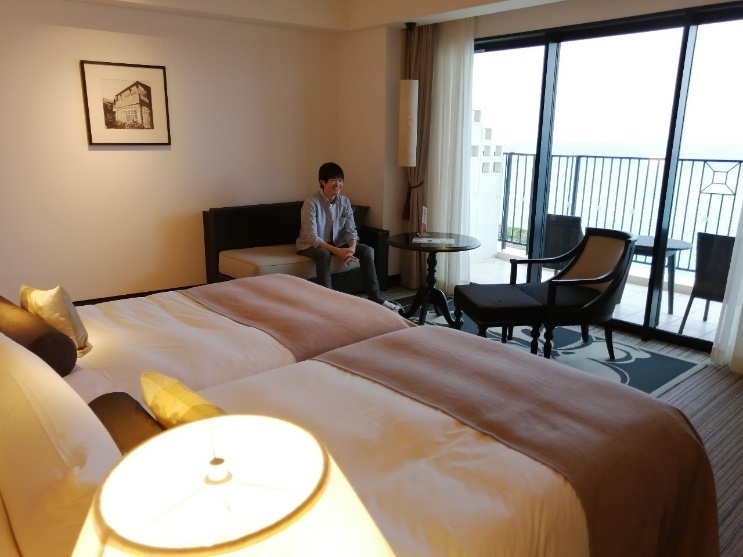
Hotel Price Ranges
If you're staying temporarily while searching for a permanent apartment, Japan offers a wide range of accommodation:
| Budget | Type | Price Range (per night) |
|---|---|---|
| Budget | Capsule hotels, hostels | $25–$45 USD |
| Mid-range | Business hotels (Toyoko Inn, APA Hotel) | $50–$90 USD |
| Comfort | 3-star city hotels | $75–$150 USD |
| Luxury | 4–5 star international hotels | $150+ USD |
Airbnb in Japan
- Airbnb operates legally in Japan under the Minpaku Law (民泊新法)
- Hosts must display a registration number — verify before booking
- Great option for families or groups needing kitchen facilities
- Price often comparable to or cheaper than business hotels for weekly stays
Daily Living Cost Estimates
Planning your budget during your transition period in Japan:
| Lifestyle | Daily Estimate |
|---|---|
| Comfortable | ~$180 USD/day (hotel + meals + transport + activities) |
| Budget-conscious | ~$60 USD/day (hostel + convenience store meals + walking) |
Practical Notes for New Arrivals
- Electrical outlets: Japan uses 100V / Type A plugs (same shape as USA but different voltage). Most electronics handle 100–240V — check your device labels. A voltage converter is rarely needed, but a plug adapter may be.
- Check-in time: Most hotels are 3:00 PM – 4:00 PM; check-out is typically 11:00 AM
- Coin laundry (コインランドリー) is available near most business hotels for ¥300–¥600 per wash+dry
<!-- enrichment-v3 -->
Public Housing Options in Japan
Beyond private rentals, Japan has several subsidized and public housing options that may be available to foreign residents.
Public (Municipal) Housing (公営住宅)
Public housing is managed by prefectures and municipalities and rented at below-market rates to low-income households.
Eligibility:
- Income below a certain threshold (varies by municipality)
- Foreign nationals: Permanent residents (永住者), long-term residents (定住者), spouses of Japanese nationals, and some other categories are eligible
- Student and working visa holders may be excluded depending on the municipality
How to Apply:
1. Check the application schedule — public housing is generally offered through a lottery system (抽選) held quarterly or annually
2. Submit an application form with proof of income, residence card, and household composition documents
3. If selected in the lottery, attend a housing assignment meeting
Monthly rent: Approximately ¥20,000–¥60,000/month depending on income and location (significantly below market rate)
Note: Availability varies greatly by region. Public housing is abundant in rural areas but extremely competitive in major cities like Tokyo and Osaka.
UR Rental Housing (UR賃貸住宅)
UR (Urban Renaissance Agency) manages approximately 700,000 rental units across Japan. UR apartments offer several advantages for foreigners:
Advantages:
- No guarantor required (保証人不要)
- No key money (礼金) or brokerage fee (仲介手数料)
- No renewal fee (更新料)
- Online application available in Japanese
- Stable, long-term leases with no arbitrary non-renewal
Eligibility:
- Monthly income ≥ 4× the monthly rent (e.g., for ¥80,000/month rent, need ¥320,000/month income)
- All nationalities can apply
Rent range: ¥30,000–¥200,000+/month depending on unit and location
How to Apply:
- Visit a UR Housing Center (UR住まいセンター) or apply online at ur-net.go.jp
- Bring: residence card, proof of income (income certificate from city hall or pay stubs), My Number card
For new residents with no income history: UR accepts alternative screening methods such as savings of at least 100× monthly rent as a substitute for income proof.
Buying Property in Japan (不動産購入)
Foreign nationals can legally purchase real estate in Japan with no restrictions based on nationality.
Key Points:
- No special approval needed for property purchase
- Foreigners can own both land and buildings
- No minimum residency requirement
The Purchase Process:
1. Find a property: Use real estate agents (不動産会社) or portals like SUUMO, LIFULL HOME'S, or At Home
2. Sign a Purchase Agreement (売買契約書): Requires your 実印 and 印鑑登録証明書
3. Apply for a home loan (住宅ローン): Available to foreign permanent residents; difficult for those on temporary visas
4. Register the property (不動産登記): Done by a judicial scrivener (司法書士) at the Legal Affairs Bureau
5. Pay acquisition tax (不動産取得税): Approximately 3% of assessed value, due within 2-3 months of purchase
Annual costs after purchase:
- Fixed Assets Tax (固定資産税): Approximately 1.4% of assessed land + building value per year
- City Planning Tax (都市計画税): Up to 0.3% of assessed value (in designated urban planning areas)
Typical purchase costs (in addition to property price):
- Real estate agent fee: 3% of price + ¥60,000 + tax
- Registration tax: 0.4–2% of assessed value
- Stamp duty: ¥10,000–¥600,000 depending on price
- Judicial scrivener fee: ¥50,000–¥150,000
- Fire insurance: ¥50,000–¥200,000 (one-time for multi-year policy)
Language tip: Real estate documents in Japan are exclusively in Japanese. Engaging a bilingual agent (外国語対応の不動産業者) or a bilingual judicial scrivener is strongly recommended for foreign buyers.
⚠️ 免責事項: 本ページの情報は参考目的であり、最新の正確な情報は各行政窓口・公式サイトでご確認ください。