
Getting a Japan Driving License as a Foreigner: Complete Guide 2026
Getting a Japan Driving License as a Foreigner: Complete Guide 2026
Driving in Japan opens up a world of convenience — especially outside major cities where public transport is limited. But navigating Japan's licensing system as a foreigner can be confusing. Whether you're converting an existing license or starting from scratch, this complete guide covers everything you need to know about getting a Japan driving license as a foreigner in 2026.
Table of Contents
- Two Ways to Get a Driving License in Japan as a Foreigner
- Countries Eligible for License Conversion
- How to Convert Your Foreign Driving License in Japan
- Taking the Japanese Driving Test from Scratch
- International Driving Permit (IDP) in Japan
- Tips for Passing the Japan Driving Test
- Frequently Asked Questions
Two Ways to Get a Driving License in Japan as a Foreigner {#two-ways}
Japan does not automatically recognize most foreign driving licenses for long-term residents. If you plan to stay in Japan for more than one year, you will need a Japanese driving license. There are two main paths depending on your home country:
| Method | Who It's For | Difficulty |
|---|---|---|
| License Conversion (切り替え) | Citizens of eligible countries | Moderate |
| Test from Scratch | All other countries | Difficult |
License Conversion (切り替え) — For Eligible Countries
If you hold a driving license from a country that Japan has a reciprocal agreement with, you may be able to convert your existing foreign driving license into a Japanese one. This process — called gaimen kirikae (外免切替) — is significantly easier than taking the full Japanese driving test and is the preferred route for eligible foreigners.
Depending on your country, you may need to pass only a written test, or both a written and a practical (skills) test. In some cases, your license can be exchanged with minimal testing.
Taking the Test from Scratch — For Other Countries
If your home country is not on Japan's eligible list, you must obtain a Japanese driving license by going through the full licensing process — the same way Japanese citizens do. This includes attending a driving school (jidosha kyoshujo) or taking the practical test directly at a driving license center (unten menkyo center). This route is notoriously difficult and often requires multiple attempts.
Countries Eligible for License Conversion {#eligible-countries}
Japan groups eligible countries into two tiers based on testing requirements. The list is periodically updated by the National Police Agency (NPA).
Group 1 Countries (Written Test Only)
Citizens of these countries generally need to pass only the written knowledge test (and an eyesight check) to convert their license. No practical driving test is required:
- Switzerland
- Germany
- France
- Belgium
- Taiwan
- Luxembourg
- Monaco
- Estonia
- Finland
- Czech Republic
- Slovenia
- Sweden
- Iceland
- Denmark
- Norway
- Portugal
- New Zealand (in some prefectures)
Note: Requirements can vary slightly by prefecture. Always confirm the latest rules with your local driving license center before applying.
Group 2 Countries (Written + Practical Test)
Citizens of these countries must pass both a written test and a practical (skills) test to complete the license exchange:
- United States (most states)
- United Kingdom
- Canada
- Australia
- South Korea
- Hong Kong
- Ireland
- Italy
- Netherlands
- Spain
- Austria
- Greece
- Luxembourg (some conditions)
The practical test for Group 2 is conducted on a closed course at the license center, not on public roads. It is considerably easier than the full driving test required for non-eligible countries.
Countries Not Eligible — Must Start from Zero
If your country is not on either list, you must obtain a Japanese driving license from scratch. Countries commonly in this category include:
- China (Mainland)
- Vietnam
- Thailand
- Philippines
- Indonesia
- Brazil
- India
- Many other countries in Asia, Africa, South America, and the Middle East
If you fall into this category, skip to the Taking the Japanese Driving Test from Scratch section.
How to Convert Your Foreign Driving License in Japan {#conversion-process}
Required Documents
Gather the following documents before your appointment. Requirements can vary slightly by prefecture, so check your local driving license center website:
| Document | Notes |
|---|---|
| Your current foreign driving license (original) | Must be valid |
| Official Japanese translation of your license | From JAF (Japan Automobile Federation) or the embassy of your country |
| Your passport | Showing entry stamps and current residence |
| Residence card (zairyu card) | Proof of registered address in Japan |
| Proof you held the license for 3+ months while living in your home country | Checked against passport entry/exit stamps |
| Residence certificate (juminhyo) | Obtain from your local municipal office |
| Application form | Available at the license center |
| Passport-sized photo | Usually 2.4cm × 3cm |
| Application fee | Varies by prefecture (approx. ¥3,000–¥5,000) |
Important: Japan requires proof that your foreign license was obtained and used while you were physically in your home country for at least 3 months after issuance. Your passport stamps will be checked. This is a common reason applications are rejected.
Where to Apply (Driving License Center)
You must apply at the driving license center (unten menkyo center) in the prefecture where you are registered as a resident. You cannot apply at a police station for license conversions.
Major centers include:
- Tokyo: Samezu (品川区) or Fuchu (府中市) License Center
- Osaka: Osaka Prefectural License Center (門真市)
- Aichi: Aichi Prefectural License Center (名古屋市)
Many centers require advance appointments, especially in urban areas. Book early as waiting times can stretch for weeks.
The Conversion Process Step-by-Step
- Get your foreign license translated — Contact JAF (Japan Automobile Federation) at jaf.or.jp or your country's embassy in Japan. JAF translations typically take 2–3 weeks and cost around ¥3,000.
- Gather all required documents — See the checklist above.
- Book an appointment at your prefectural license center.
- Submit documents and undergo document screening — Staff verify that your foreign license and passport stamps meet the 3-month residency requirement.
- Pass the eyesight test — Basic vision check at the counter.
- Take the written knowledge test (Group 1 and 2 countries) — 10 questions, must score 7/10 or higher. Available in English and other languages.
- Take the practical test (Group 2 countries only) — A short skills test on a closed course at the center.
- Pay the issuance fee and receive your Japanese license — Same day if all tests are passed.
Typical Costs and Timeline
| Item | Cost (Approx.) |
|---|---|
| JAF translation | ¥3,000 |
| Application/test fee | ¥2,550 |
| License issuance fee | ¥2,050 |
| Total | ~¥7,600–¥10,000 |
Timeline: From gathering documents to receiving your license, budget 2–6 weeks depending on JAF translation wait times and appointment availability.
Taking the Japanese Driving Test from Scratch {#test-from-scratch}
If your country is not eligible for license conversion, you must earn a Japanese driving license the hard way. This is the same process Japanese nationals go through, but it's widely considered one of the most difficult driving tests in the world for foreigners.
Written Test (学科試験) — Available in English
The written theory test (gakka shiken) consists of 95 true/false questions plus 5 illustration-based questions, for a total of 100 marks. You need 90 or above to pass.
Good news: The test is available in English at most major license centers, as well as in Chinese, Korean, Portuguese, Spanish, Vietnamese, Thai, and Tagalog, among others. Check with your local center for available languages.
How to prepare:
- Study the official traffic rules (road rules booklet), available in English from license centers
- Practice with online mock tests (search "Japan driving license test English practice")
- Many apps offer practice questions in multiple languages
Practical Test (技能試験) — What to Expect
The practical skills test (gino shiken) is taken on a closed course at the license center — not on public roads. This distinction is crucial: Japan's course tests are extremely precise and demanding.
Key elements tested:
- S-curve and crank course — Narrow lanes requiring tight maneuvering
- Emergency stop — Stopping quickly within a marked zone
- Lane changing and mirror checks — Exaggerated mirror and shoulder checks are required
- Speed and smoothness — Driving too slowly can result in point deductions
- Starting and stopping procedure — Every action must follow the prescribed sequence
Pro tip: The examiner uses a strict point-deduction system. Actions that seem minor — like not exaggeratedly checking mirrors or failing to confirm the handbrake — result in point losses. Most foreigners fail multiple times.
How Many Attempts Are Needed?
Realistically, most foreigners who take the practical test directly (without attending a Japanese driving school) require 5 to 15+ attempts before passing. Each attempt costs approximately ¥2,800–¥3,000 in test fees.
The alternative: Attend a licensed Japanese driving school (kyoshujo). This is more expensive (¥250,000–¥350,000 for a full course), but dramatically increases pass rates and guarantees a license upon course completion in most cases. Schools in urban areas increasingly offer English-language instruction.
International Driving Permit (IDP) in Japan {#idp}
Which Countries Can Use an IDP in Japan?
Japan is a signatory to the 1949 Geneva Convention on Road Traffic, not the 1968 Vienna Convention. This means only IDPs issued under the 1949 Geneva Convention are recognized in Japan.
Countries whose IDPs are valid in Japan include:
- United States
- United Kingdom
- Canada
- Australia
- France
- Germany
- Most other Geneva Convention member states
Important: IDPs from countries that are only signatories to the 1968 Vienna Convention (including many Eastern European countries and China) are not valid in Japan.
How Long Is It Valid?
An IDP allows you to drive in Japan for up to 1 year from your date of entry, or until your IDP expires — whichever comes first. Once 1 year has passed since entry, your IDP is no longer valid for driving in Japan, regardless of its expiry date.
You cannot renew or extend an IDP while in Japan. To continue driving legally after 1 year, you must obtain a Japanese driving license.
Tips for Passing the Japan Driving Test {#tips}
Watch instructional videos — YouTube has detailed walkthroughs of Japanese driving test courses filmed from the driver's perspective. Watch these repeatedly before your test.
Take a trial lesson at the license center — Many centers offer paid practice sessions on their test course. This is invaluable for understanding the exact route and expectations.
Learn the prescribed sequence of actions — Before starting: adjust seat → adjust mirrors → fasten seatbelt → check surroundings → start engine. Every step must be performed in order and visibly.
Exaggerate your checks — Japanese examiners expect highly visible head movements when checking mirrors and blind spots. Subtle glances will cost you points.
Attend a Japanese driving school if budget allows — Especially for those from non-eligible countries, a kyoshujo is often the most time-efficient path to a license.
Contact JAF early — JAAF (Japan Automobile Federation / JAF) is an invaluable resource for foreigners. Their English website provides up-to-date information on license conversion requirements by country.
Check prefecture-specific rules — Requirements, appointment systems, and testing languages differ by prefecture. Always confirm current details directly with your local license center.
Frequently Asked Questions {#faq}
Can I use my foreign driving license in Japan?
You can use your foreign driving license in Japan only for a short period. If your home country's IDP is issued under the 1949 Geneva Convention, you may drive for up to 1 year from your entry date. However, if you live in Japan long-term (or stay more than 1 year), you must obtain a Japanese driving license. Simply holding a foreign license — even a valid one — does not allow long-term driving in Japan.
How long does it take to convert a foreign driving license in Japan?
The timeline for a foreign driving license conversion in Japan typically takes 2–6 weeks from start to finish. The main bottleneck is obtaining the official Japanese translation of your license from JAF, which takes 2–3 weeks. Once you have all documents ready, the appointment and conversion process at the license center is usually completed in a single day — assuming you pass the required tests.
Is the Japan driving test available in English?
Yes, the written theory test (gakka shiken) is available in English at most prefectural driving license centers in Japan. Many centers also offer the test in Chinese, Korean, Portuguese, Spanish, Vietnamese, and other languages. However, the practical (skills) test is conducted entirely in Japanese, so familiarize yourself with key instructions and the test procedure in advance.
Which countries can convert their license in Japan without a driving test?
A number of countries, primarily in Europe and Oceania, can convert their driving license in Japan with no practical driving test required. These include Switzerland, Germany, France, Belgium, Taiwan, Luxembourg, Monaco, Estonia, Finland, Czech Republic, Slovenia, Sweden, Iceland, Denmark, Norway, and Portugal, among others. Citizens of these countries typically only need to pass a short written knowledge test and an eyesight check. Requirements are updated periodically, so always verify current rules with your local license center or the National Police Agency website.
How much does it cost to get a driving license in Japan as a foreigner?
Costs vary significantly depending on your route:
| Route | Estimated Total Cost |
|---|---|
| License conversion (eligible country) | ¥7,000–¥12,000 |
| Direct practical test (multiple attempts) | ¥20,000–¥60,000+ |
| Japanese driving school (full course) | ¥250,000–¥350,000 |
For license conversion, budget around ¥7,600–¥10,000 covering the JAF translation (¥3,000), application fee (¥2,550), and issuance fee (¥2,050). For those taking the test from scratch without a driving school, costs can escalate quickly due to repeated test fees. Attending a licensed driving school is the most reliable — though expensive — path to obtaining a Japanese license.
Last updated: March 2026. Procedures and requirements may change. Always confirm the latest information with your prefectural driving license center or the National Police Agency of Japan.
<!-- book-enrichment-v1 -->
Rental Cars & Transportation
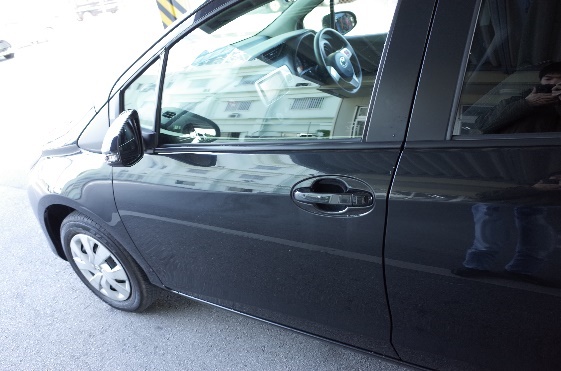
Major Rental Car Companies
If you plan to drive in Japan, these are the most reliable rental car companies:
| Company | Notes |
|---|---|
| Toyota Rent a Car (https://rent.toyota.co.jp/en/) | Largest network, English support available |
| Nissan Rent a Car (https://nissan-rentacar.com/en/) | Wide availability, competitive pricing |
| Times Car (https://timescar-rental.com/en/) | Good for short-term and one-way rentals |
| Nippon Rent-A-Car (https://www.nipponrentacar.co.jp/english/) | Strong presence near airports |
- An International Driving Permit (IDP) is required alongside your home country license
- Japan drives on the left side of the road
- ETCs (electronic toll collection) are available — ask at the rental counter
Taxi Apps
- GO (ゴー) – Japan's most popular taxi app; English interface available, covers major cities
- Uber – available in some cities but limited compared to GO
Bus Travel Tips
- Many regional buses are cash only — have coins and small bills ready
- IC cards (Suica/ICOCA) work on most city buses in major urban areas
- Long-distance highway buses (夜行バス) require advance booking via apps like Willer or Kosoku Bus
Navigation
- Google Maps works well for public transit, walking, and driving in Japan
- For driving, consider Yahoo! カーナビ or Apple Maps for real-time toll route guidance
- Always download offline maps before heading to rural areas where signal may be weak
<!-- enrichment-v3 -->
Buying and Owning a Car in Japan
If you plan to buy and register a car in Japan, you'll need to understand the registration system, mandatory inspections, and insurance requirements.
Step 1: Parking Space Certificate (車庫証明)
Before registering a car, you must obtain a parking space certificate (車庫証明 / 自動車保管場所証明書).
- Required for: All standard vehicles in most urban and suburban areas
- Not required in: Some rural municipalities (check with your local police station)
- Application: Submit at the police station (警察署) in the area where you will park the car
- Documents: Proof of parking space (contract or ownership document), scale map showing the location, application form
- Fee: Approximately ¥2,500–¥3,000
- Processing time: 3–5 business days
If renting a parking space, get a letter from the parking lot owner confirming your right to use the space (保管場所使用承諾証明書).
Step 2: Vehicle Registration (自動車登録)
New vehicles are registered by the dealer on your behalf. For used vehicles, you may need to handle registration yourself or through an administrative scrivener (行政書士).
Registration is done at:
- Land Transport Office (運輸支局/自動車検査登録事務所) — for standard vehicles
- Light Vehicle Inspection Organization (軽自動車検査協会) — for kei cars (軽自動車)
Documents required:
- Vehicle certificate (車検証 / 自動車検査証) from the seller
- Parking space certificate (車庫証明)
- Compulsory automobile liability insurance (自賠責保険証明書)
- Residence card and seal (認印 or 実印 depending on vehicle type)
Fees: Registration fee ¥2,800 + license plate fee (varies by prefecture, typically ¥1,500–¥3,000)
Step 3: Vehicle Inspection (車検 / 自動車検査)
All vehicles in Japan must pass a mandatory roadworthiness inspection:
| Vehicle Age | Inspection Frequency |
|---|---|
| New car (first inspection) | 3 years after purchase |
| After first inspection | Every 2 years |
| Kei cars (軽自動車) | Same schedule |
| Trucks (commercial) | Every 1 year |
Where to get a vehicle inspection:
- Dealer or car shop (ディーラー/整備工場): Most common; they handle everything
- User inspection (ユーザー車検): You bring the car to the inspection station yourself (cheaper but requires preparation)
Approximate cost: ¥60,000–¥100,000 for a typical passenger car (includes inspection, taxes, and maintenance)
Automobile Insurance
Two types of insurance are required/recommended:
1. Compulsory Automobile Liability Insurance (自賠責保険/共済) — MANDATORY
- Required by law for all vehicles on public roads
- Covers bodily injury to others caused by your vehicle
- Does NOT cover: Property damage, injury to yourself, damage to your own vehicle
- Premium example: ¥17,650 for 24 months for a standard passenger car
- Can be purchased at car dealers, post offices, convenience stores, or online
2. Voluntary Automobile Insurance (任意保険/共済) — STRONGLY RECOMMENDED
- Covers damages not included in compulsory insurance
- Coverage types:
- Bodily injury liability (対人賠償): Covers injuries to others beyond compulsory insurance limits
- Property damage liability (対物賠償): Covers damage to other vehicles, property
- Collision damage (車両保険): Covers damage to your own car
- Personal injury (人身傷害): Covers your own injuries
- Annual premium: Varies widely; approximately ¥50,000–¥150,000/year depending on coverage, vehicle, and driver history
- For foreigners: Your overseas driving history may not transfer — you may start with higher premiums as a "new driver"
If a Traffic Accident Occurs (交通事故が発生した場合)
Immediately after an accident:
1. Stop the vehicle immediately — do not flee the scene (hit-and-run is a serious crime)
2. Check for injuries — call 119 (ambulance) if anyone is hurt
3. Call the police (110) — always required by law, even for minor accidents
4. Do not move injured people unless they are in immediate danger
5. Exchange information with the other party: name, address, phone, license number, insurance info
After the accident:
- Obtain a Traffic Accident Certificate (交通事故証明書) from the Japan Traffic Safety Association (自動車安全運転センター) — required for insurance claims
- Seek medical evaluation even if you feel fine — whiplash and injuries can appear days later
- Contact your insurance company to begin the claims process
Important for foreigners: You must carry your Japanese driver's license (or valid International Driving Permit + home license) at all times while driving. Foreign licenses alone are only valid for 1 year after arrival in Japan.
📎 参考リンク・公式情報
※ 外部サイトへのリンクです。最新情報は各公式サイトでご確認ください。
⚠️ 免責事項: 本ページの情報は参考目的であり、最新の正確な情報は各行政窓口・公式サイトでご確認ください。