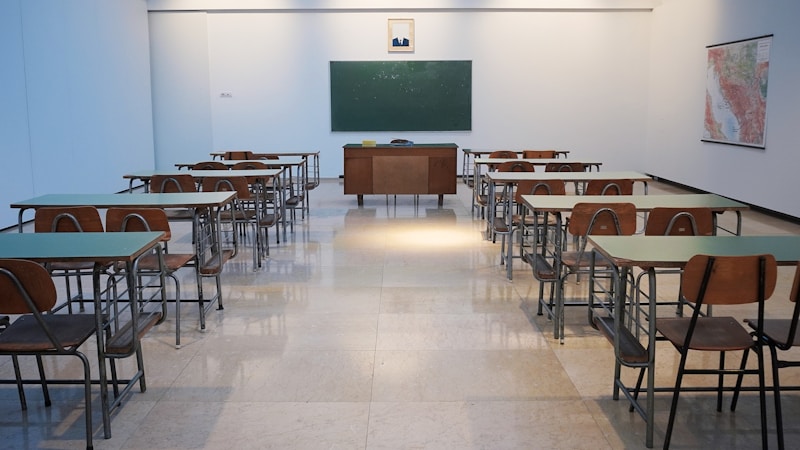
How to Enroll Your Child in School in Japan as a Foreigner
Warning: no stdin data received in 3s, proceeding without it. If piping from a slow command, redirect stdin explicitly: < /dev/null to skip, or wait longer.
How to Enroll Your Child in School in Japan as a Foreigner
Target Keyword: school enrollment japan foreigner
Table of Contents
- Introduction
- Understanding the Japanese School System
- Is School Enrollment Mandatory for Foreign Children?
- Step-by-Step School Enrollment Process for Foreigners
- Required Documents for School Enrollment
- Choosing Between Public, Private, and International Schools
- The Japanese School Calendar and Daily Schedule
- Japanese School Lunches (Kyushoku)
- Extracurricular Activities (Bukatsu)
- Language Support for Foreign Children
- School Supplies, Uniforms, and Expenses
- Navigating School Culture as a Foreign Parent
- Special Education and Support Services
- Junior High School and High School Enrollment
- Frequently Asked Questions (FAQ)
- Conclusion
Introduction
Moving to Japan with children is an exciting but challenging transition. One of the first and most pressing concerns for foreign parents is education — specifically, how to enroll your child in school in Japan. Whether you have just arrived in Tokyo, Osaka, Nagoya, or a smaller city, navigating the Japanese school enrollment process as a foreigner can feel overwhelming, especially when most official documents and procedures are conducted entirely in Japanese.
This comprehensive guide is designed to walk you through everything you need to know about school enrollment in Japan as a foreigner. From understanding the types of schools available to preparing the required documents, managing school lunches and extracurricular activities, and communicating with Japanese teachers and staff — we cover it all.
Japan has one of the most structured and respected education systems in the world, consistently ranking among the top nations in international assessments such as PISA. The system emphasizes discipline, teamwork, respect for others, and academic rigor. However, it can also feel rigid and unfamiliar to children and parents accustomed to Western or Southeast Asian educational environments.
The good news is that Japan's municipal governments are increasingly supportive of foreign residents, and many cities now offer multilingual support services for school enrollment. With the right preparation, your child can transition smoothly into the Japanese school system and even thrive in it.
Let's begin.
Understanding the Japanese School System
Before diving into the enrollment process, it's important to understand how Japan's education system is structured. The system follows a 6-3-3-4 structure:
- Elementary School (小学校 / Shōgakkō): Ages 6–12 (Grades 1–6), 6 years
- Junior High School (中学校 / Chūgakkō): Ages 12–15 (Grades 7–9), 3 years
- High School (高等学校 / Kōtōgakkō): Ages 15–18 (Grades 10–12), 3 years
- University/College (大学 / Daigaku): Ages 18+ (4 years for bachelor's degree)
Compulsory education in Japan covers elementary school and junior high school — a total of 9 years. High school is not legally compulsory, though the attendance rate exceeds 98%.
For foreign children in Japan, there are four main types of educational institutions to consider.
Public Schools
Public schools (公立学校 / Kōritsu Gakkō) are funded and operated by local municipal governments. They are free of tuition charge for elementary and junior high school students, including foreign nationals. Instruction is conducted entirely in Japanese, and students are expected to follow the national curriculum set by the Ministry of Education, Culture, Sports, Science and Technology (MEXT).
Public schools are the most common choice for foreign children who plan to live in Japan for an extended period. Many public schools in cities with large foreign populations now offer Japanese language support classes and have multilingual staff or interpreters available.
Key features:
- Free tuition (elementary and junior high)
- Instruction in Japanese
- Strong emphasis on community, discipline, and group activities
- Access to school lunch (kyushoku)
- Extracurricular clubs (bukatsu)
Private Schools
Private schools (私立学校 / Shiritsu Gakkō) are independently operated and charge tuition fees. Some private schools offer a bilingual curriculum or follow an alternative educational philosophy (e.g., Montessori, Waldorf). Private schools generally have a more selective admissions process, often requiring entrance examinations.
For foreign children, private schools in Japan may or may not offer language support. They tend to be more expensive but may provide a more flexible curriculum.
Key features:
- Tuition fees vary widely (¥50,000–¥200,000+ per month)
- May offer bilingual or English-track programs
- Often require entrance exams
- More diverse student bodies in some urban areas
International Schools
International schools (インターナショナルスクール / Intānashonaru Sukūru) follow foreign curricula — typically British (IGCSE/A-Level), American (AP), or the International Baccalaureate (IB). Instruction is primarily in English, though many schools also offer Japanese language classes.
International schools are the preferred choice for expat families on short-term assignments or for families who want their children to continue in an English-medium curriculum. However, they are very expensive.
Key features:
- Instruction in English (or other foreign languages)
- Follow international curricula (IB, British, American)
- High tuition fees (¥1,000,000–¥3,000,000+ per year)
- Often require proof of residency or work visa sponsorship
- Social environment dominated by expatriate families
Popular international schools in Japan include the American School in Japan (ASIJ), British School in Tokyo, Canadian International School, and many others in major cities.
Foreign National Schools
Foreign national schools (外国人学校 / Gaikokujin Gakkō) were established to serve specific ethnic communities in Japan. The most well-known examples are Korean schools (朝鮮学校 / Chōsen Gakkō) and Brazilian schools, which follow their home country's national curriculum and use the respective language of instruction.
If your child is from a specific national background and there is a community school nearby, this may be a culturally comfortable option. However, these schools are private and charge tuition.
Is School Enrollment Mandatory for Foreign Children?
This is one of the most common questions asked by foreign parents arriving in Japan.
Under Japanese law, compulsory education applies to Japanese nationals. Technically, foreign nationals are not legally obligated to enroll their children in Japanese schools. However, the Japanese government strongly encourages it, and local municipalities are required to provide foreign children with the opportunity to attend public schools upon request.
According to MEXT guidelines, municipalities must accept foreign children who wish to enroll in public schools, regardless of their nationality or Japanese language ability. They must also provide support for Japanese language learning.
In practice, most foreign families with children in the compulsory education age range (6–15 years) do enroll them in either public or international schools. Homeschooling is not officially recognized as an alternative to school enrollment in Japan, although it is not explicitly prohibited either.
Bottom line: If you want your child educated in Japan, enrollment in a public school is free and accessible. For most long-term residents, public school enrollment is strongly recommended.
Step-by-Step School Enrollment Process for Foreigners
Step 1: Register at the Municipal Office
The school enrollment process begins at your local municipal office (市区町村役場 / Shiku-chōson Yakuba). When you complete your resident registration (住民登録 / Jūmin Tōroku) — which is mandatory within 14 days of moving to a new address — the municipal office will ask whether you have school-age children.
If you do, they will either:
- Automatically issue a school enrollment notification, or
- Direct you to the education department (教育委員会 / Kyōiku Iinkai) of the municipality
What to bring to the municipal office:
- Your Residence Card (在留カード / Zairyū Kādo)
- Your child's Residence Card (if applicable)
- Passport
- Proof of address (if available)
Step 2: Receive the Enrollment Notification
After registering your residence, the municipal board of education (教育委員会) will issue a School Enrollment Notification (就学通知書 / Shūgaku Tsūchisho). This document tells you:
- The name and address of the assigned school
- The enrollment date
- Any required documents to bring
In most cities, children are automatically assigned to the closest public school in their neighborhood (学区 / Gakku). You may be able to request a different school in some cases, but this requires a formal application and is not guaranteed.
Step 3: Attend the Enrollment Orientation
Before the academic year begins (or before your child starts school mid-year), there is typically an enrollment orientation (入学説明会 / Nyūgaku Setsumeikai). This event is held at the school and covers:
- School rules and expectations
- Required supplies and uniforms
- School calendar and events
- Contact information for teachers and staff
- Language support resources (in areas with many foreign students)
If you don't speak Japanese, bring a bilingual dictionary, a translator app, or ask the municipal education office in advance if an interpreter will be available.
Step 4: Prepare Required Documents
Gather all the required documents before the enrollment date (details in the next section).
Step 5: Submit Documents and Complete Enrollment
On the enrollment date, submit your documents to the school office (職員室 / Shokuinshitsu) or the designated reception desk. You will meet your child's homeroom teacher (担任 / Tannin) and receive the school's contact information.
Your child will then be officially enrolled and will begin attending school from the designated start date.
Required Documents for School Enrollment
The specific documents required may vary slightly by municipality, but the following are typically needed for public school enrollment of a foreign child in Japan:
| Document | Details |
|---|---|
| School Enrollment Notification (就学通知書) | Issued by the municipal board of education |
| Residence Card (在留カード) | For the child and parent/guardian |
| Passport | Child's and parent's passports |
| Health Record (母子健康手帳) | Japan's maternal and child health handbook — if available |
| Previous School Records | Transcript or report card from previous school (if applicable) |
| Vaccination Records | Proof of standard vaccinations |
| Emergency Contact Form | Usually provided by the school to fill in |
| Photo (証明写真) | Small passport-style photo for school ID (some schools require this) |
Additional notes:
- Foreign documents (school records, birth certificates) may need to be translated into Japanese. Ask the school whether they require a certified translation or if an unofficial translation is acceptable.
- If you do not have a Mother-Child Health Handbook (because it is issued in Japan), you may be asked to complete a health questionnaire instead.
- Some schools will ask you to fill in a background questionnaire (家庭調査票 / Katei Chōsa Hyō) covering family information, emergency contacts, allergies, and medical conditions.
Choosing Between Public, Private, and International Schools
Deciding which type of school is best for your child depends on multiple factors.
Factors to Consider
Length of stay: If you are in Japan for 1–2 years, an international school may ease the transition and allow continuity with your home curriculum. If you plan to stay for 5+ years, a public school provides deeper integration into Japanese society.
Child's age: Younger children (under 10) generally adapt to Japanese language instruction more quickly. Older children may struggle more with an all-Japanese environment and might benefit from at least some international school experience initially.
Career and education goals: If your child plans to attend university in Japan, the public school track and the Japanese high school entrance exam system are the natural pathway. For university in your home country or abroad, an IB or AP curriculum at an international school may be preferable.
Budget: Public schools are free. International schools can cost millions of yen per year. This is often the deciding factor for many foreign families.
Language of Instruction
| School Type | Primary Language | Japanese Instruction |
|---|---|---|
| Public School | Japanese | Full immersion |
| Private School (Japanese) | Japanese | Full immersion |
| Private School (Bilingual) | Japanese + English | Partial |
| International School | English (or other) | Japanese as a second language |
| Foreign National School | Home country language | Minimal or none |
Cost Comparison
| School Type | Annual Cost (approximate) |
|---|---|
| Public Elementary School | Free (¥0 tuition) + school supplies ~¥50,000–¥100,000/year |
| Public Junior High School | Free (¥0 tuition) + supplies and club fees |
| Private Japanese School | ¥500,000–¥1,500,000/year |
| International School | ¥1,000,000–¥3,500,000/year |
| Foreign National School | ¥500,000–¥1,200,000/year |
Note: Even at public schools, families are expected to cover costs for school supplies, uniforms, school trips (修学旅行 / Shūgaku Ryokō), and extracurricular activities. These can add up to ¥50,000–¥150,000 per year for elementary school and more for junior high.
The Japanese School Calendar and Daily Schedule
Academic Year Structure
Japan's academic year runs from April to March — different from most Western countries where school years start in September. This is an important point for foreign families to note when planning a move to Japan.
The year is divided into three semesters:
| Semester | Period | Vacation Following |
|---|---|---|
| First Semester (一学期) | Early April – Late July | Summer Vacation (~6 weeks: late July to late August) |
| Second Semester (二学期) | Early September – Late December | Winter Vacation (~2 weeks: late December to early January) |
| Third Semester (三学期) | Early January – Late March | Spring Vacation (~2 weeks: late March to early April) |
Key dates:
- April: New academic year begins, entrance ceremonies (入学式 / Nyūgaku Shiki)
- July–August: Summer vacation (夏休み / Natsuyasumi)
- March: Graduation ceremonies (卒業式 / Sotsugyō Shiki), end of academic year
- Late March – Early April: Spring vacation (春休み / Haruyasumi)
If your family arrives in Japan mid-year, your child can enroll at any point during the school year. Schools are accustomed to accepting transfer students (転入生 / Ten'nyūsei).
A Typical School Day
Japanese schools run on a highly structured daily schedule. Here is a typical schedule for an elementary school student:
| Time | Activity |
|---|---|
| 7:30–8:20 | Arrival at school (students walk or cycle — no school buses in most public schools) |
| 8:20–8:30 | Morning meeting / homeroom (朝のホームルーム) |
| 8:30–12:00 | Morning classes (4 periods × 45 minutes each) |
| 12:00–13:00 | School lunch (給食 / Kyūshoku) + cleanup + free play |
| 13:00–15:30 | Afternoon classes (2–3 periods) |
| 15:30–16:00 | Classroom cleaning (掃除 / Sōji) — students clean their own classrooms |
| 16:00 | Dismissal (varies by grade and day) |
Note: Elementary school students are expected to walk to school in groups (集団登下校 / Shūdan Tōgekō), organized by neighborhood. There are no school buses for most public schools. If you live far from the assigned school, discuss transportation options with the school office.
Junior high and high school students typically stay later, especially those involved in extracurricular clubs (bukatsu), sometimes until 6:00–7:00 PM.
National Holidays and School Holidays
Japan has 16 national holidays. Schools are closed on these days:
- New Year (January 1–3)
- Coming of Age Day (second Monday of January)
- National Foundation Day (February 11)
- The Emperor's Birthday (February 23)
- Vernal Equinox Day (around March 20)
- Showa Day (April 29)
- Constitution Day (May 3)
- Greenery Day (May 4)
- Children's Day (May 5)
- Marine Day (third Monday of July)
- Mountain Day (August 11)
- Respect for the Aged Day (third Monday of September)
- Autumnal Equinox Day (around September 23)
- Sports Day (second Monday of October)
- Culture Day (November 3)
- Labour Thanksgiving Day (November 23)
Japanese School Lunches (Kyushoku)
What Is Kyushoku?
One of the most beloved aspects of the Japanese school experience is the school lunch program, known as kyushoku (給食). Unlike many countries where children bring packed lunches or buy cafeteria food individually, Japanese public schools serve a hot, nutritionally balanced meal to every student, every day.
The school lunch is typically prepared in the school's own kitchen (自校調理 / Jikkō Chōri) or a central kitchen that serves multiple schools (センター調理 / Sentā Chōri). Students eat together in their classroom, not a cafeteria. The lunch is served by student volunteers — children rotate the responsibility of serving food to their classmates.
This system teaches children about nutrition, food culture, and the importance of communal responsibility. It is a deeply ingrained part of Japanese school culture.
Nutritional Standards
MEXT establishes strict nutritional guidelines for school lunches, based on age group. A typical kyushoku consists of:
- Staple grain (主食 / Shushoku): Rice, bread, or noodles
- Main dish (主菜 / Shusai): Fish, meat, tofu, or eggs
- Side dish (副菜 / Fukusai): Vegetables, seaweed, or root vegetables
- Soup (汁物 / Shirumono): Miso soup, clear broth, or vegetable soup
- Milk (牛乳 / Gyūnyū): A small carton of milk is served daily
The meals are carefully planned by licensed nutritionists (栄養教諭 / Eiyō Kyōyu) attached to the school or school district. Monthly menus are published and sent home to parents so families can plan around it.
Dietary Restrictions and Allergies
This is one of the most significant concerns for foreign parents, particularly those with children who have religious dietary restrictions (halal, kosher, vegetarian) or food allergies.
Food allergies: Public schools take food allergies seriously. When enrolling your child, you will be asked to complete a food allergy form (アレルギー調査票 / Arerugī Chōsa Hyō). For serious allergies (particularly to eggs, milk, wheat, peanuts, tree nuts, shellfish, buckwheat, and fruit), the school will work with the nutrition teacher to create a modified meal plan or allow the child to bring their own food from home.
Religious dietary restrictions: This is more complex. Japan's public school system does not currently offer halal or kosher-certified school lunches. If your family observes halal dietary laws, you have several options:
- Request that your child bring a packed lunch (obento / お弁当) every day
- Ask the school to review the monthly menu and identify which items are permissible
- Contact your local municipal board of education to inquire about accommodations
Some municipalities with large Muslim communities (such as areas of Gunma, Aichi, and Shizuoka with significant Turkish or Indonesian communities) have developed informal accommodations over time. Advocacy organizations like the Japan Muslim Association (JMA) may be able to provide guidance specific to your city.
Vegetarianism: Japan's school lunches frequently contain fish, meat, or broth derived from meat. Full vegetarian or vegan accommodations are generally not provided. The packed lunch option is the most practical solution.
Cost of School Lunch
School lunch is not free in most Japanese public schools (with some exceptions — a growing number of municipalities are now making kyushoku free as part of child-support policies). The typical cost is:
- Elementary school: ¥250–¥350 per day (approximately ¥4,500–¥6,000 per month)
- Junior high school: ¥300–¥400 per day (approximately ¥5,500–¥7,000 per month)
Payment is collected monthly via a designated bank account or through the school. Ask the school office about the payment method during enrollment.
Extracurricular Activities (Bukatsu)
Types of Clubs and Activities
Bukatsu (部活動) — club activities — are an integral part of Japanese school life, particularly in junior high and high school. Japanese students spend a significant amount of time after school (and on weekends) dedicated to their club, whether it is a sport or a cultural activity.
Common sports clubs (運動部 / Undō-bu) include:
- Baseball (野球部 / Yakyū-bu)
- Soccer (サッカー部)
- Basketball (バスケットボール部)
- Volleyball (バレーボール部)
- Swimming (水泳部)
- Track and field (陸上部)
- Martial arts: Judo (柔道部), Kendo (剣道部), Karate (空手部)
- Tennis (テニス部)
- Table tennis (卓球部)
Common cultural clubs (文化部 / Bunka-bu) include:
- Brass band / wind ensemble (吹奏楽部 / Suisōgaku-bu) — very popular
- Art club (美術部)
- Calligraphy (書道部)
- Drama club (演劇部)
- Computer/IT club (コンピュータ部)
- Science club (科学部)
- English conversation club (英語部) — great for bilingual foreign students!
In elementary school, extracurricular activities are less formal. Many elementary schools offer after-school programs, and children often participate in community sports leagues or lessons outside of school (swimming, music, art, martial arts).
How to Join a Club
In junior high school, students are typically expected (and in some schools, required) to join at least one club. During the beginning of the school year, clubs hold welcome events (勧誘活動 / Kan'yū Katsudō) where senior members invite new students to observe and try out activities.
For foreign children, joining a sports club can be an excellent way to make friends and integrate socially, since sports require minimal Japanese language ability to participate. Cultural clubs like the English conversation club may also be welcoming to foreign students.
Bukatsu activities are often very time-intensive — daily practice, weekend matches, and summer training camps (合宿 / Gasshuku) are common. As a parent, be prepared for a significant time commitment.
After-School Programs and Juku
In addition to school-based clubs, many Japanese children attend juku (塾) — private cram schools or tutoring centers — after school. Juku focus on academic subjects (particularly math, Japanese, and English) and help prepare students for school exams and high school entrance examinations.
For foreign children, there are also Japanese language juku that specifically target non-native speakers, helping them catch up to grade-level language proficiency. Your municipal board of education or local NPOs may know of such resources in your area.
After-school childcare programs (学童保育 / Gakudō Hogo) are available at most elementary schools for working parents. Children can stay at school or a nearby facility until approximately 6:00–7:00 PM. There is typically a waiting list in urban areas, so apply early.
Language Support for Foreign Children
Japanese Language Classes
One of the most pressing concerns for foreign children entering a Japanese public school is language. Most public schools conduct all instruction in Japanese, and children who do not speak Japanese may initially feel isolated or confused.
However, the Japanese government and many municipal education boards have recognized this challenge and established support systems:
Japanese Language Pull-Out Classes (日本語指導 / Nihongo Shidō): Many schools, particularly in cities with larger foreign populations, offer dedicated Japanese language instruction for non-native speaking students. These classes are typically conducted separately from the regular classroom, where students receive intensive Japanese language instruction at their proficiency level.
As of 2024, MEXT data showed that over 70,000 public school students in Japan needed Japanese language support, speaking over 100 different languages. The largest groups were Portuguese, Chinese, Filipino, Spanish, and Vietnamese speakers.
Buddy Systems and Peer Support: Some schools pair foreign students with Japanese classmates who may speak the same language or are particularly welcoming and patient. This informal buddy system can make an enormous difference in a child's adjustment.
JSL (Japanese as a Second Language) Curriculum: MEXT has developed a JSL curriculum designed to help foreign children learn Japanese and access subject content simultaneously. Not all schools implement this, but it is increasingly available in urban areas.
Bilingual Education Resources
The quality and availability of language support varies enormously by location. Major urban areas — Tokyo, Osaka, Nagoya, Yokohama, Hamamatsu, Toyota — tend to have the best support infrastructure. Rural areas may have very little.
Resources that may be available:
- Multilingual school guides: Many municipal education boards publish school guides in English, Chinese, Korean, Portuguese, Spanish, Vietnamese, and other languages.
- Interpretation services: Some municipalities offer telephone or in-person interpretation services for school enrollment and parent-teacher meetings.
- Translation apps: Many schools and parents now use translation apps (Google Translate, DeepL) for basic communication.
Multilingual School Materials
MEXT publishes a range of multilingual resources for foreign students and their parents. These include:
- "Study in Japan" guide for newcomer students (日本語初期指導リーフレット) — available in many languages
- Multilingual explanations of school rules, emergency procedures, and daily routines
- Subject-specific vocabulary guides in multiple languages
You can access many of these resources through the MEXT website or through your municipal board of education.
School Supplies, Uniforms, and Expenses
What Your Child Will Need
When enrolling in a Japanese public school, you will need to purchase several essential items. The specific list varies by school, but common requirements include:
For elementary school:
- Randoseru (ランドセル): The iconic rigid backpack used by Japanese elementary school students. These can range from ¥30,000 to over ¥100,000. Lighter and less expensive alternatives exist — ask if they are acceptable at your school.
- Stationery (pencils, erasers, ruler, scissors, colored pencils)
- Gym clothes (体操服 / Taisō Fuku) — school-specific design, purchased through the school
- Indoor shoes (上履き / Uwabaki) — slippers worn inside the school building
- Swimming suit and cap (for summer swimming lessons)
- Art and craft supplies (watercolors, drawing pad)
- Recorder (リコーダー) — a small wind instrument taught to all elementary students
- School bag / satchel liner or pencil case
For junior high school:
- Uniform (制服 / Seifuku) — blazer/jacket, shirt, trousers or skirt; school-specific design
- Gym clothes
- Indoor shoes
- Stationery
- Electronic dictionary (電子辞書) — used in some schools from middle school
Uniforms: Public elementary schools usually do not require uniforms (though some do, particularly in urban areas). Junior high schools and high schools almost universally require uniforms. Uniforms are purchased from designated retailers affiliated with the school and can cost ¥30,000–¥80,000 for a full set.
Financial Assistance Programs
Japan offers financial assistance for families who cannot afford school expenses. The main program is:
就学援助制度 (Shūgaku Enjo Seido) — School Attendance Assistance Program:
This municipal program provides subsidies for school supplies, uniforms, school lunches, and school trip fees for qualifying low-income families. Both Japanese nationals and foreign nationals are eligible.
To apply, contact your municipal board of education and ask about the assistance program. You will need to demonstrate income below a certain threshold (which varies by municipality).
Additionally, Japan abolished tuition fees for public high school for most families under the High School Tuition Support Fund (高校等就学支援金制度), which provides monthly tuition support payments directly to qualifying schools on behalf of eligible students, including foreign nationals enrolled in certified schools.
Navigating School Culture as a Foreign Parent
Parent-Teacher Associations (PTA)
Almost every Japanese school has a PTA (保護者会 / Hogoshakai or PTA). Participation in PTA activities is strongly encouraged — and in some schools, it feels almost mandatory. PTA responsibilities may include:
- Organizing school events (sports day, cultural festival)
- Helping with traffic safety and walking-to-school supervision
- Maintaining the school garden
- Fundraising activities
For foreign parents, PTA participation can be daunting due to the language barrier. However, it is also an excellent opportunity to meet Japanese parents and build a support network. Many PTA groups now have at least some members who speak English or another foreign language.
Parent-Teacher Meetings
Parent-teacher meetings (個人面談 / Kojin Mendan) are held several times per year, typically in July and November. These are one-on-one meetings with your child's homeroom teacher (担任) where you discuss your child's academic progress, social adjustment, and any concerns.
For foreign parents:
- Request an interpreter in advance if possible
- Bring a bilingual dictionary or translation app
- Prepare written notes about concerns in advance
- Ask the teacher to speak slowly and write down key points
Some municipalities and schools can arrange for a volunteer interpreter (通訳ボランティア) to attend parent-teacher meetings. Ask the school office well in advance.
School Events
Japanese schools have a rich calendar of events that parents are expected to attend and sometimes participate in. Major annual events include:
- Sports Day (運動会 / Undōkai): An all-day outdoor athletic event where students compete in races and team activities. Parents attend and often bring bento lunches for picnics on the school grounds.
- Cultural Festival (文化祭 / Bunkasai): Junior high and high school students present performances, art exhibitions, and classroom projects.
- Graduation Ceremony (卒業式 / Sotsugyōshiki): A formal, emotional ceremony at the end of the school year.
- Open Classroom Day (授業参観 / Jugyō Sankan): Parents are invited to observe regular classes.
These events are important bonding opportunities for the school community and are generally very welcoming to foreign parents.
Special Education and Support Services
Japan's public school system provides support for children with learning disabilities, physical disabilities, developmental disorders (such as autism spectrum disorder and ADHD), and other special educational needs through:
Special Support Classes (特別支援学級 / Tokubetsu Shien Gakkyū): Small classes attached to regular schools, offering individualized instruction for children who need extra support.
Special Support Schools (特別支援学校 / Tokubetsu Shien Gakkō): Separate schools dedicated to students with more significant disabilities.
Resource rooms (通級指導教室 / Tsūkyū Shidō Kyōshitsu): Children who are generally enrolled in regular classes but need additional support in specific areas (language, behavior, etc.) can attend resource rooms for pull-out sessions.
For foreign children, it can sometimes be difficult to distinguish between a language acquisition challenge and a genuine learning disability — they can look similar from the outside. If you have concerns about your child's development, request an assessment from the school or a child development specialist. Many assessments and diagnostic processes can be conducted in multiple languages or with interpreter support.
Junior High School and High School Enrollment
Junior High School
The transition from elementary to junior high school (中学校) happens automatically within the same school district. Students who attended their neighborhood elementary school are assigned to the corresponding neighborhood junior high school. No entrance exam is required.
For foreign students entering Japan at junior high school age, the enrollment process is similar to elementary school — register at the municipal office, receive the enrollment notification, and submit documents to the school.
Junior high school is where the academic and social pressure begins to intensify in Japan. The school day becomes longer, club activities become more serious, and preparation for high school entrance exams begins in earnest in Grade 9 (year 3 of junior high).
High School Entrance Exams
High school (高等学校) is not part of compulsory education in Japan, meaning students must take entrance examinations (高校入試 / Kōkō Nyūshi) to gain admission. This applies equally to foreign students.
The entrance exam process typically includes:
1. School selection: Students (and parents) research and select target schools. Public high schools are generally selected within the same prefecture.
2. Internal evaluation (内申書 / Naishinsho): Junior high school grades and participation in extracurricular activities are compiled into an official school report submitted to high school applicants.
3. Written examination: Subjects typically include Japanese language, mathematics, English, science, and social studies.
4. Interview: Some schools include an interview component.
For foreign students:
This is one of the most challenging hurdles. The entrance exams are conducted in Japanese, and the material assumes 9 years of Japanese-medium education. However:
- Some prefectures offer special admission examinations for foreign students (外国人特別選抜) with accommodations such as time extensions, use of dictionaries, or simplified Japanese language in exam questions.
- Prefectures including Tokyo, Kanagawa, Osaka, and many others have established these special pathways.
- If your child struggles with the regular entrance exam pathway, ask the junior high school's guidance counselor (進路指導 / Shinro Shidō) about options available in your prefecture.
Vocational and technical high schools (専門高校 / Senmon Kōkō) may be a more accessible pathway for some foreign students, offering hands-on training in fields like agriculture, information technology, cooking, or design, where Japanese language requirements are somewhat lower.
Frequently Asked Questions (FAQ)
Q1: Can my child enroll in a Japanese public school even if they don't speak any Japanese?
Yes. Japanese public schools are required to accept all foreign children who wish to enroll, regardless of Japanese language proficiency. Many schools offer Japanese language support programs. Your child will face an initial adjustment period, but children are remarkably adaptable, and most foreign children become conversational in Japanese within 6–12 months of immersion.
Q2: Do I need to pay tuition at a public elementary or junior high school in Japan?
No. Tuition at public elementary schools (小学校) and junior high schools (中学校) is free for all students, including foreign nationals. However, you will need to pay for school lunches, supplies, uniforms, and school trips, which can add up to ¥50,000–¥200,000 per year depending on the school and activities.
Q3: My child is mid-year age (not starting from Grade 1). Can they still enroll?
Yes. Children can enroll at any point during the school year as a transfer student (転入生 / ten'nyūsei). Contact the municipal board of education to initiate the process.
Q4: What age does school start in Japan?
Elementary school begins in April of the year in which a child turns 6 years old (as of April 1st of that year). Children who turn 6 between April 2 and April 1 of the following year start elementary school in the corresponding April.
Q5: My family is Muslim. Can my child get halal food at school?
Public schools in Japan do not provide halal-certified school lunches as standard. Most Muslim families opt to send their children to school with a packed lunch (obento) instead of using the school lunch system. Discuss this with the school office during enrollment, and request that your child be allowed to bring their own lunch.
Q6: Is there Japanese language support at all public schools?
Not at all schools. Support is most available in urban areas with larger foreign populations (Tokyo, Osaka, Nagoya, Hamamatsu, Shizuoka, Gunma, etc.). Rural schools may have no dedicated Japanese language support. If you are researching neighborhoods to live in, it is worth checking with the local municipal education board about available language support before deciding where to rent housing.
Q7: Can my child skip a grade or be placed in a grade based on academic ability rather than age?
No. Japanese schools assign children to grades strictly by age. Grade skipping or holding back a year is not practiced in Japanese public schools.
Q8: My child attended school in another country. Will their previous academic records be recognized?
Schools may review previous academic records to understand your child's background, but Japanese schools do not formally transfer credit from foreign schools. Your child will be placed in the grade corresponding to their age and will follow the Japanese curriculum from that point.
Q9: How do I communicate with my child's teacher if I don't speak Japanese?
Many schools now accept written communication via the school notebook (連絡帳 / Renrakuchō) — a small notebook passed between parents and teachers. You can write in your language and use a translation app to include a Japanese translation. Some teachers communicate via email or school apps. Ask about the school's preferred communication method at enrollment.
Q10: Are there English-language resources about the Japanese school system available online?
Yes. MEXT publishes multilingual guides for foreign students. Many municipal boards of education (particularly in cities like Yokohama, Kawasaki, Nagoya, and Tokyo) publish school enrollment guides in English, Chinese, Korean, Portuguese, and other languages. Searching "[your city name] board of education foreign students English" will typically yield useful results.
Q11: What happens if my child struggles significantly with the language and falls behind academically?
Inform the school as soon as possible. Request a meeting with the homeroom teacher and the school's language support teacher (if available). Schools can provide additional support, modify expectations temporarily, and in some cases arrange for a support teacher (支援員 / Shien-in) to assist your child in class. Local NPOs and volunteer Japanese language classes are also available in most cities.
Q12: Is there a waiting list for public schools?
Generally no — you are assigned to your neighborhood school and there is no waiting list for public schools. However, if you request to attend a school outside your designated district (学区外就学), there may be limited spots.
Q13: Can my child take physical education (PE) if they have medical conditions or physical limitations?
Yes, with proper documentation. Bring a doctor's note (診断書 / Shindan-sho) explaining any restrictions. The school's PE teacher will accommodate limitations accordingly.
Q14: What is the school year like for high school, and does my child need entrance exams?
High school operates on the same April–March academic year. Entrance exams are required for both public and private high schools. Foreign students may be eligible for special exam accommodations depending on the prefecture. Consult with your child's junior high school guidance counselor in advance.
Q15: My child has special educational needs (autism, ADHD, dyslexia). How will the school accommodate them?
Japanese public schools have special support classes and resource rooms available. When enrolling, disclose your child's needs and any diagnostic documentation you have. A meeting with the school's special education coordinator (特別支援教育コーディネーター) will be arranged to develop an appropriate support plan. If documentation is in a foreign language, provide a translation.
Conclusion
Enrolling your child in school in Japan as a foreigner is a process that may seem daunting at first, but it is entirely navigable with the right preparation. Japan's public school system is one of the finest in the world, offering children not just academic education but deep life skills: responsibility, cooperation, resilience, and cultural appreciation.
The key steps to remember are:
1. Register your residence at the municipal office as soon as you arrive
2. Receive and respond to the enrollment notification from the board of education
3. Choose the right school type for your child's age, language ability, and your family's timeline
4. Prepare the required documents including health records, identification, and previous school records
5. Communicate proactively with the school about language needs, dietary restrictions, and any special support your child requires
6. Engage with school culture — PTA, events, and parent-teacher meetings — to support your child's integration
For most foreign children, attending a Japanese public school is a transformative experience. The friendships formed, the discipline developed, and the cultural understanding gained are invaluable. Many adult "third culture kids" who attended Japanese schools look back on the experience with deep fondness, describing it as one of the most formative periods of their lives.
If you have specific questions about school enrollment in your city or prefecture, your best starting point is always the municipal board of education (教育委員会). In most cities, they can provide multilingual support or connect you with community organizations that can assist.
Welcome to Japan — and good luck to your child on their educational journey here.
Disclaimer: This article is provided for general informational purposes only. School enrollment procedures, fees, and available support services vary by municipality and may change over time. Always confirm the latest details with your local municipal board of education and the specific school. This content was prepared with reference to MEXT guidelines and general practices across Japan as of 2026.
Word count: ~6,500 words
⚠️ 免責事項: 本ページの情報は参考目的であり、最新の正確な情報は各行政窓口・公式サイトでご確認ください。